
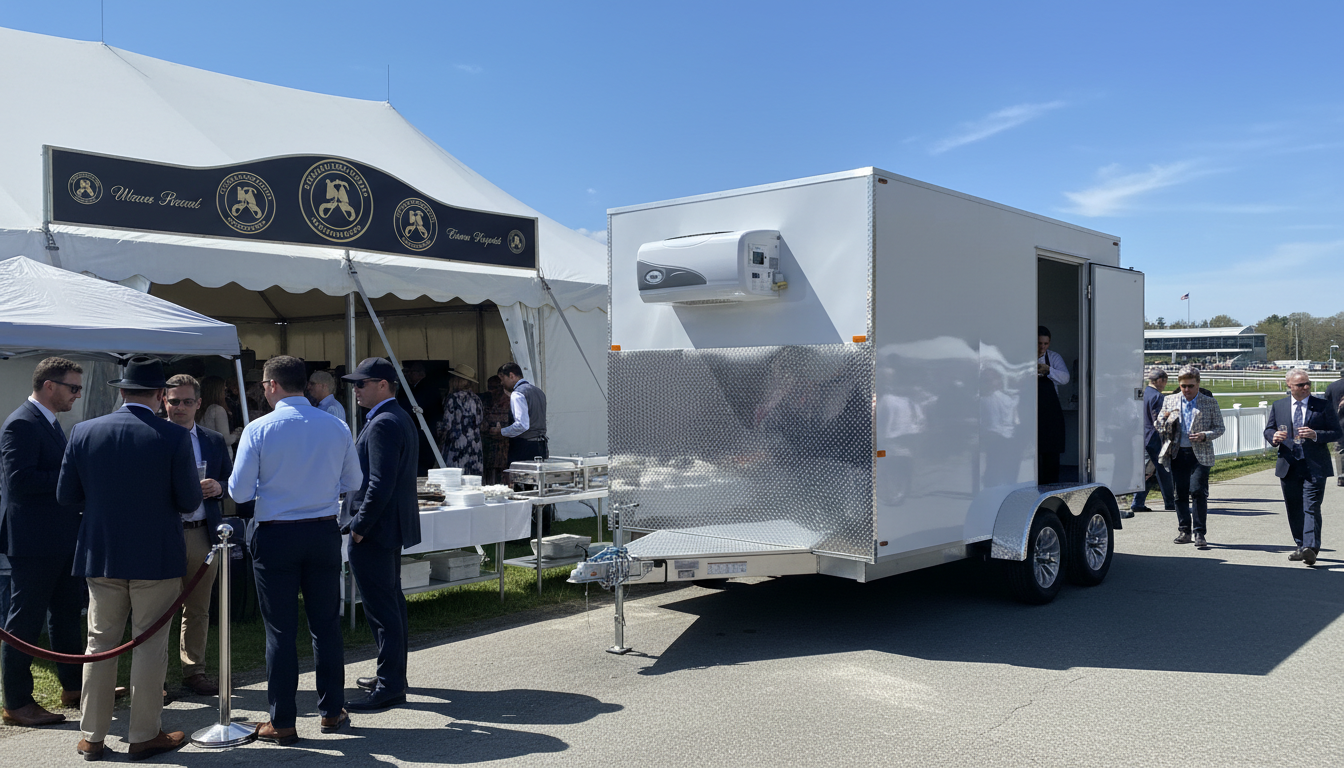
Expert Advice & Guidance On Buying A Mobile Refrigerated Trailer.
Work with Cold Wheels to find your perfect trailer.
📊 1. Market Demand & Customer Needs
Target customers: Who will rent — caterers, event planners, food trucks, farms, florists?
Peak seasons: Are rentals seasonal (e.g., summer events, harvest) or year-round?
Local competition: Do others offer similar trailers? What sizes/features do they have?
Use cases: Short-term event rental vs long-term storage will affect trailer type.
👉 Understanding your market helps you choose the right sizes and features to buy.
🧊 2. Trailer Size & Capacity
Exterior dimensions: Common options are 6’, 8’, 10’, 12’, 16’, 20’+.
Cubic capacity: Bigger means more rental revenue potential but higher cost.
Door size & layout: Important if customers move bulky items (e.g., through roll-up rear doors).
Multiple units: Consider a range of sizes rather than just 1 size.
💡 A mix of small & medium can attract more customers and maximize utilization.
❄️ 3. Temperature Control
Temperature range: Can it go from near-ambient down to well below freezing?
Refrigeration type: Diesel, electric plug-in, or combo (hybrid)?
Insulation quality: Better insulation reduces running costs and improves stability.
Multi-zone control: Some trailers can produce different temperatures inside.
👉 Higher performance expands what you can rent it for (meats, produce, pharmaceuticals, etc.).
🧰 4. Build Quality & Durability
Construction materials: Aluminum vs steel framing; corrosion-resistant skins.
Flooring strength: Load capacity and resistance to moisture/cleaning chemicals.
Reinforcement: For frequent load/unload activity.
Warranty: Manufacturer’s coverage on structure & refrigeration.
Durability directly impacts maintenance costs and rental reliability.
⚙️ 5. Power & Refrigeration System
Power source: Onboard genset, shore power, battery/electric options.
Noise levels: Especially for events or residential delivery.
Backup systems: Redundancy is critical for high-value rentals (food, flowers).
Ensure the system fits customer needs and power availability at rental sites.
🔄 6. Ease of Use & Customer Experience
User interface: Simple controls for renters.
Door accessibility: Easy locking/unlocking, ramps, lift gates.
Maintenance access: Easy to service reduces downtime.
Documentation: Clear instructions for renters reduce support issues.
Higher usability means fewer calls & better repeat business.
📈 7. Cost Analysis
Upfront Costs
Purchase price
Delivery & prep
Licensing/registration
Ongoing Costs
Fuel/Electricity
Maintenance & repairs
Insurance
Storage when not rented
Return on Investment
Rental rate per day/week/month
Expected utilization rate
Payback period
👉 Build a simple profit model to compare potential returns.
🪪 8. Regulatory & Insurance Considerations
DOT registration
Insurance policy costs for rentals
Safety & compliance standards
Local codes for food handling or special cargo
Insurance can be a large ongoing expense — shop multiple carriers.
🛠 9. Maintenance & Serviceability
Spare parts availability
Service network nearby
Ease of cleaning
Routine service intervals
A well-maintained fleet keeps rentals smooth and revenue flowing.
🔄 10. Resale Value & Lifecycle
Refrigerated trailers depreciate, but good brands hold value.
Think about useful life — typically 7–15 years depending on usage.
Choose trailers with popular specs for better resale later.
📦 11. Brand, Warranty & Support
Brands with strong dealer support help with service and parts.
Longer warranties reduce early-life repair costs.
Dealer financing can help cash flow.
🧑🤝🧑 12. Financing & Cash Flow
Cash vs loan vs lease
Interest rates and terms
Impact on tax deductions
Financing spreads cost, but interest adds expense.
🧠 Summary: What Matters Most
Here’s a quick checklist:
✅ Right size & temperature capability
✅ Reliable refrigeration & power options
✅ Durability & ease of use
✅ Cost vs expected rental revenue
✅ Strong service & support network
✅ Low downtime & maintenance costs
✅ Good resale value